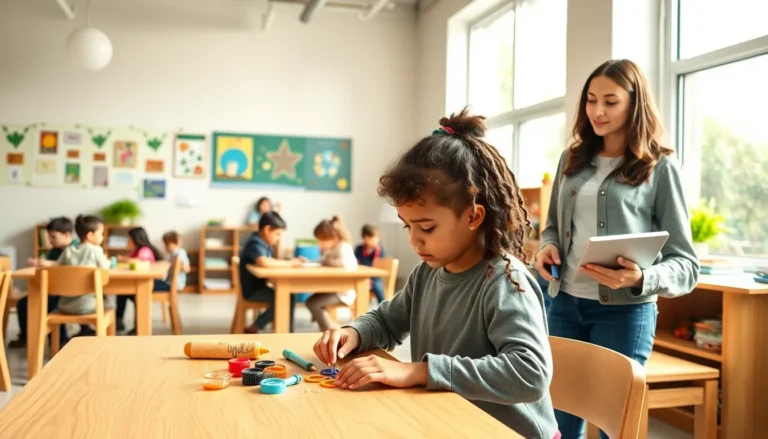

Top alternative education paths are reshaping how students learn in 2025. Traditional classrooms don’t work for everyone. Some students thrive with hands-on projects. Others need flexible schedules or self-directed study. Alternative education offers these options and more.
Parents and students now have access to diverse learning models. Montessori schools emphasize independence. Waldorf education focuses on creativity. Homeschooling provides personalized curricula. Online programs deliver flexibility. Each approach serves different learning styles and family needs.
This guide explores the most popular alternative education options available today. It covers what makes each method unique, who benefits most, and how to pick the right fit.
Table of Contents
ToggleKey Takeaways
- Top alternative education options in 2025 include Montessori, Waldorf, homeschooling, unschooling, and online or hybrid programs—each serving different learning styles.
- Montessori schools emphasize self-directed learning and mixed-age classrooms, making them ideal for independent learners who thrive with freedom.
- Waldorf education integrates arts into every subject and limits technology, appealing to creative students and families seeking less screen time.
- Homeschooling offers complete curriculum control and flexible scheduling, though it requires significant parent time and involvement.
- Online and hybrid learning programs provide flexibility for self-motivated students, athletes, and families who travel frequently.
- Choosing the right alternative education path depends on your child’s learning style, independence level, social needs, budget, and long-term goals.
What Is Alternative Education?
Alternative education refers to any teaching approach outside the standard public or private school system. These programs reject one-size-fits-all instruction. They prioritize individual learning needs over rigid curricula.
The term covers a broad range of options. Montessori schools, Waldorf programs, homeschooling, charter schools, and online academies all fall under this umbrella. Each model uses distinct methods to engage students.
Why do families choose alternative education? Common reasons include:
- Learning differences: Students with ADHD, dyslexia, or giftedness often benefit from specialized approaches.
- Values alignment: Some parents want education rooted in specific philosophies or religious beliefs.
- Pace flexibility: Advanced learners can move faster. Those who need more time get it.
- Safety concerns: Bullying or school environment issues push some families toward alternatives.
Alternative education isn’t new. Montessori schools date back to 1907. Homeschooling has existed for centuries. But these options have grown significantly in recent years. The pandemic accelerated interest as families discovered new ways to educate their children.
Montessori Schools
Montessori education uses a child-centered approach developed by Dr. Maria Montessori. Students learn through hands-on activities and self-directed exploration. Teachers act as guides rather than lecturers.
Key features of Montessori schools include:
- Mixed-age classrooms: Children typically span a three-year age range. Younger students learn from older peers. Older students reinforce knowledge by teaching.
- Prepared environments: Classrooms contain specialized materials designed to teach specific concepts. Students choose their activities.
- Uninterrupted work periods: Long blocks of time allow deep focus without constant transitions.
- No grades or tests: Assessment happens through observation and portfolio work.
Montessori programs serve students from infancy through high school. Over 5,000 Montessori schools operate in the United States alone.
This alternative education model works well for independent learners who thrive with freedom. It may challenge students who need more structure or direct instruction. Parents should observe classrooms before enrolling to see if the approach matches their child’s personality.
Waldorf Education
Waldorf education originated in Germany in 1919. Rudolf Steiner created this approach to develop the whole child, head, heart, and hands. Today, over 1,200 Waldorf schools exist worldwide.
Waldorf classrooms look different from traditional schools. Students paint, sculpt, knit, and garden alongside academic subjects. Teachers often stay with the same class for multiple years, building deep relationships.
Core principles of Waldorf education include:
- Delayed academics: Formal reading instruction typically begins around age seven. Early childhood focuses on imaginative play.
- Arts integration: Every subject incorporates artistic elements. Math lessons might include drawing geometric forms.
- Limited technology: Most Waldorf schools restrict screens, especially for younger children.
- Rhythm and routine: Days follow predictable patterns meant to create security.
Waldorf education appeals to families who value creativity and want less screen time. Critics argue the delayed reading approach doesn’t suit all learners. Some parents also question the philosophical foundations rooted in Steiner’s anthroposophy.
This alternative education path works best for creative students who learn through movement and artistic expression.
Homeschooling and Unschooling
Homeschooling has exploded in popularity. The National Center for Education Statistics reports that approximately 3.3 million students were homeschooled in the U.S. as of recent data. That number has likely grown since then.
Homeschooling gives parents complete control over curriculum, schedule, and teaching methods. Families can use pre-packaged curricula, online courses, or create their own programs. Many homeschoolers participate in co-ops where families share teaching responsibilities.
Benefits of homeschooling include:
- Personalized pace and content
- Flexible scheduling for travel or activities
- Strong family bonds
- Safe learning environment
Unschooling takes homeschooling further. This philosophy rejects formal curricula entirely. Children direct their own learning based on interests. If a child becomes fascinated with dinosaurs, that interest drives lessons in science, history, reading, and math.
Unschooling sounds radical, but proponents argue it produces self-motivated learners. Critics worry about gaps in essential knowledge.
Both homeschooling and unschooling require significant parent involvement. They work best when at least one parent can dedicate substantial time to education. State laws vary widely about oversight and testing requirements for these alternative education approaches.
Online and Hybrid Learning Programs
Online education has matured beyond simple video lessons. Modern virtual schools offer live instruction, interactive assignments, and social opportunities. Students can earn accredited diplomas entirely online.
Types of online alternative education programs include:
- Full-time virtual schools: Students complete all coursework online. Many are public and tuition-free.
- Supplemental courses: Students take individual classes online while attending traditional school.
- Hybrid programs: These combine online learning with in-person meetings, typically one to three days per week.
Online learning suits certain students well. Self-motivated teens often excel. Student athletes, performers, and those with medical conditions benefit from scheduling flexibility. Families who travel frequently find online school practical.
But, online education presents challenges. Younger students typically need more supervision. Social interaction requires intentional effort. Screen fatigue affects some learners.
Hybrid programs address many concerns about fully virtual education. Students get face-to-face interaction while maintaining flexibility. These programs have grown rapidly as an alternative education choice.
When evaluating online schools, families should verify accreditation, review graduation rates, and understand the level of support provided. Quality varies significantly across providers.
How to Choose the Right Alternative Education Path
Selecting an alternative education option requires honest assessment of several factors. No single approach works for every family.
Start by evaluating the student:
- Learning style: Does your child learn best through hands-on activities, reading, discussion, or visual materials?
- Independence level: Some students thrive with freedom. Others need structure and clear expectations.
- Social needs: How important is daily peer interaction?
- Special requirements: Learning differences or giftedness may point toward specific programs.
Next, consider practical factors:
- Budget: Montessori and Waldorf schools charge tuition. Homeschooling has variable costs. Many online programs are free.
- Parent availability: Homeschooling demands significant time. Other options require less involvement.
- Location: Urban families have more alternative education choices than rural families.
- Long-term goals: Consider college preparation and career paths.
Visit schools and observe classes before deciding. Talk to current families. Ask about typical student outcomes.
Don’t fear making changes. Many families try one alternative education approach and switch to another. The goal is finding what helps your specific child learn and grow.