Elementary school ideas can transform ordinary lessons into moments kids actually remember. Teachers and parents know the challenge: keeping young minds engaged while building real skills. The good news? It doesn’t require expensive supplies or hours of prep time.
This guide covers practical activities, science projects, art ideas, and learning games that work in real classrooms. Each idea focuses on hands-on learning because children retain more when they do rather than just listen. Whether you’re a teacher planning next week’s lessons or a parent looking for weekend projects, these elementary school ideas offer a solid starting point.
Table of Contents
ToggleKey Takeaways
- Elementary school ideas work best when they focus on hands-on learning, helping kids retain more by doing rather than just listening.
- Science projects like volcano eruptions, plant experiments, and simple circuits bring abstract concepts to life with affordable supplies.
- Learning games such as Math Bingo, scavenger hunts, and vocabulary relays make skill-building feel like play while keeping students engaged.
- Art activities like collage storytelling and nature art develop fine motor skills, creativity, and cross-subject connections.
- Effective elementary school ideas connect lessons to real life, offer student choices, and use simple materials already available in classrooms.
- Reflecting after activities helps cement understanding and teaches students metacognition—thinking about their own thinking.
Engaging Classroom Activities That Spark Curiosity
Curiosity drives learning. The best elementary school ideas tap into children’s natural desire to explore and ask questions.
Mystery Boxes
Place an object inside a sealed box. Students ask yes-or-no questions to identify the item. This activity builds critical thinking and teaches kids to form hypotheses. It works for any subject, hide a historical artifact, a math manipulative, or a nature specimen.
Story Starters
Give students the first sentence of a story and let them complete it. For example: “The dog found a glowing rock in the backyard.” This sparks imagination while practicing writing skills. Teachers can tie prompts to current units, like adding a science or history theme.
Question Walls
Designate a bulletin board where students post questions they want answered. Review questions weekly and let the class research answers together. This elementary school idea encourages independent thinking and shows kids their curiosity matters.
Role-Playing Scenarios
Assign students roles related to lesson content. During a unit on community helpers, kids can act as firefighters, doctors, or mail carriers. Role-playing makes abstract concepts concrete and gives kinesthetic learners a chance to shine.
Hands-On Science Projects for Elementary Students
Science clicks when kids can touch, build, and test. These elementary school ideas bring scientific concepts to life without complicated materials.
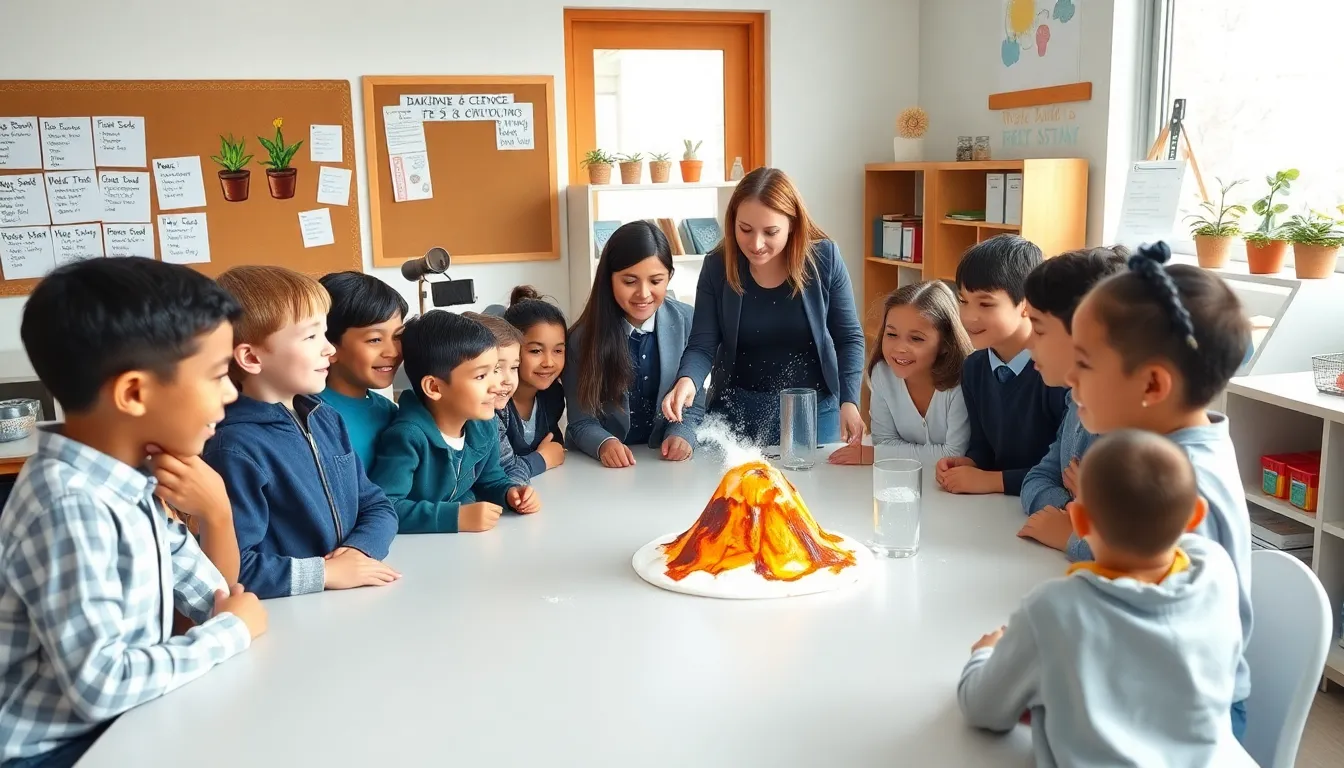
Volcano Eruptions
The classic baking soda and vinegar volcano remains popular for good reason. Kids observe a chemical reaction firsthand. Add food coloring for visual impact. Teachers can extend learning by discussing gases, acids, and bases at age-appropriate levels.
Plant Growth Experiments
Have students grow beans in different conditions, one with light, one without, one with water only. They record observations daily. This teaches the scientific method while demonstrating plant biology. Most supplies cost under five dollars.
Sink or Float Stations
Collect various objects: cork, coins, plastic toys, fruit. Students predict whether each item will sink or float, then test their guesses. This elementary school idea introduces density and buoyancy without heavy vocabulary.
Weather Journals
Students track temperature, cloud types, and precipitation over several weeks. They look for patterns and make predictions. This ongoing project connects to geography, math (graphing data), and observation skills.
Simple Circuits
With batteries, wires, and small bulbs, kids can build basic circuits. They learn about electricity flow and troubleshoot when bulbs don’t light. Many students find this “a-ha moment” unforgettable.
Art and Creative Expression Ideas
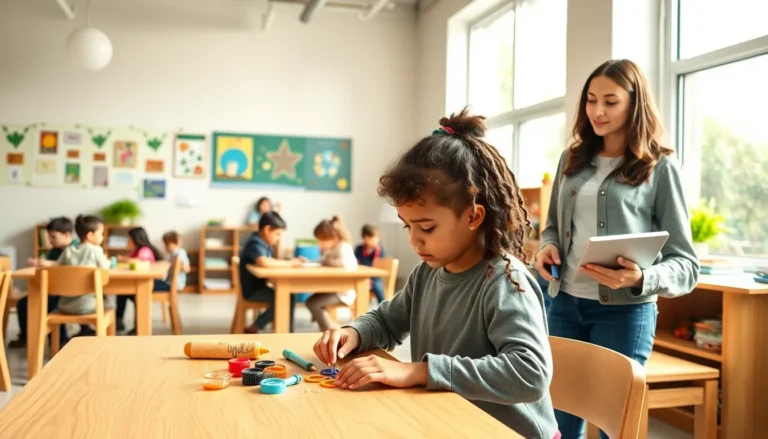
Art develops fine motor skills, self-expression, and patience. These elementary school ideas integrate creativity across subjects.
Collage Storytelling
Students cut images from magazines to create visual stories. They arrange pictures on paper and write captions or full narratives. This activity connects reading comprehension with artistic expression.
Nature Art
Take a short walk outside. Students collect leaves, sticks, and flowers (where permitted). Back inside, they arrange materials into patterns or pictures. This introduces symmetry, patterns, and appreciation for outdoor spaces.
Self-Portrait Projects
Provide mirrors and ask students to draw themselves. Teachers can add layers: include something that represents a hobby, a family tradition, or a favorite book. Elementary school ideas like this build self-awareness and communication skills.
Illustrated Timelines
Combine history with art. Students draw key events from a period they’re studying, ancient Egypt, the American Revolution, or their own life story. Visual timelines help kids understand sequence and cause-effect relationships.
Recycled Art Sculptures
Collect clean recyclables: cardboard tubes, bottle caps, egg cartons. Challenge students to build something new. This encourages problem-solving and environmental awareness.
Fun Learning Games and Group Activities
Games remove pressure and add motivation. These elementary school ideas make skill-building feel like play.
Math Bingo
Create bingo cards with answers. Call out math problems instead of numbers. Students solve mentally and mark correct answers. This works for addition, subtraction, multiplication, or division depending on grade level.
Vocabulary Relay Races
Divide students into teams. One player runs to the board, writes a vocabulary word’s definition, and runs back. The next player adds another word. First team to define all words correctly wins. Movement keeps energy high.
Scavenger Hunts
Hide clues around the classroom or school. Each clue contains a question related to current lessons. Students solve problems to find the next location. Elementary school ideas with physical movement work well for restless learners.
Partner Reading Games
Pair students with different reading levels. The stronger reader helps the other, and both practice fluency. Add a timer for friendly competition, how many pages can they read together in ten minutes?
Jeopardy-Style Reviews
Before tests, create a review game with categories and point values. Teams compete to answer questions. This format makes studying feel less tedious and identifies gaps before assessment day.
Tips for Making Elementary Learning Memorable
Great elementary school ideas share common traits. These tips help any activity stick.
Connect to Real Life
Kids remember lessons that relate to their world. When teaching fractions, use pizza slices. When discussing weather, reference yesterday’s storm. Real-world connections answer the question, “Why does this matter?”
Give Choices
Allow students to pick between two project options or select their own topics within boundaries. Choice increases ownership and motivation. Even small decisions, “Should we use markers or crayons?”, matter.
Celebrate Effort, Not Just Results
Praise the process: “You kept trying even when it was hard.” This builds growth mindset. Students who fear failure won’t take creative risks.
Keep Supplies Simple
Most effective elementary school ideas use materials already in classrooms: paper, scissors, crayons, recycled items. Expensive kits aren’t necessary for meaningful learning.
Reflect After Activities
Ask students what they learned, what surprised them, and what they’d do differently. Brief reflection cements understanding and teaches metacognition, thinking about thinking.