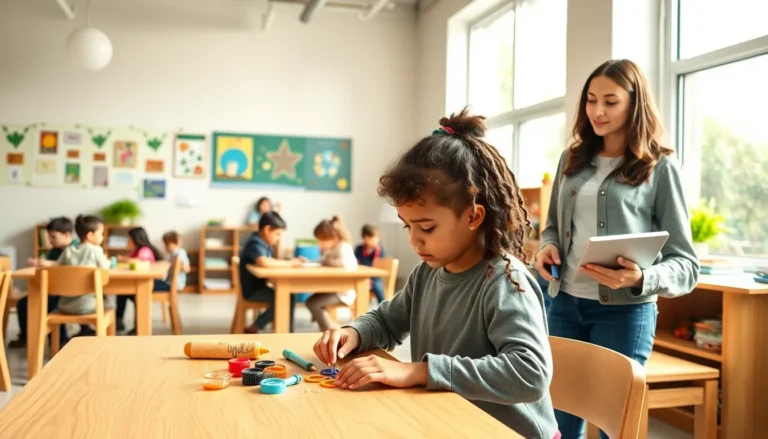
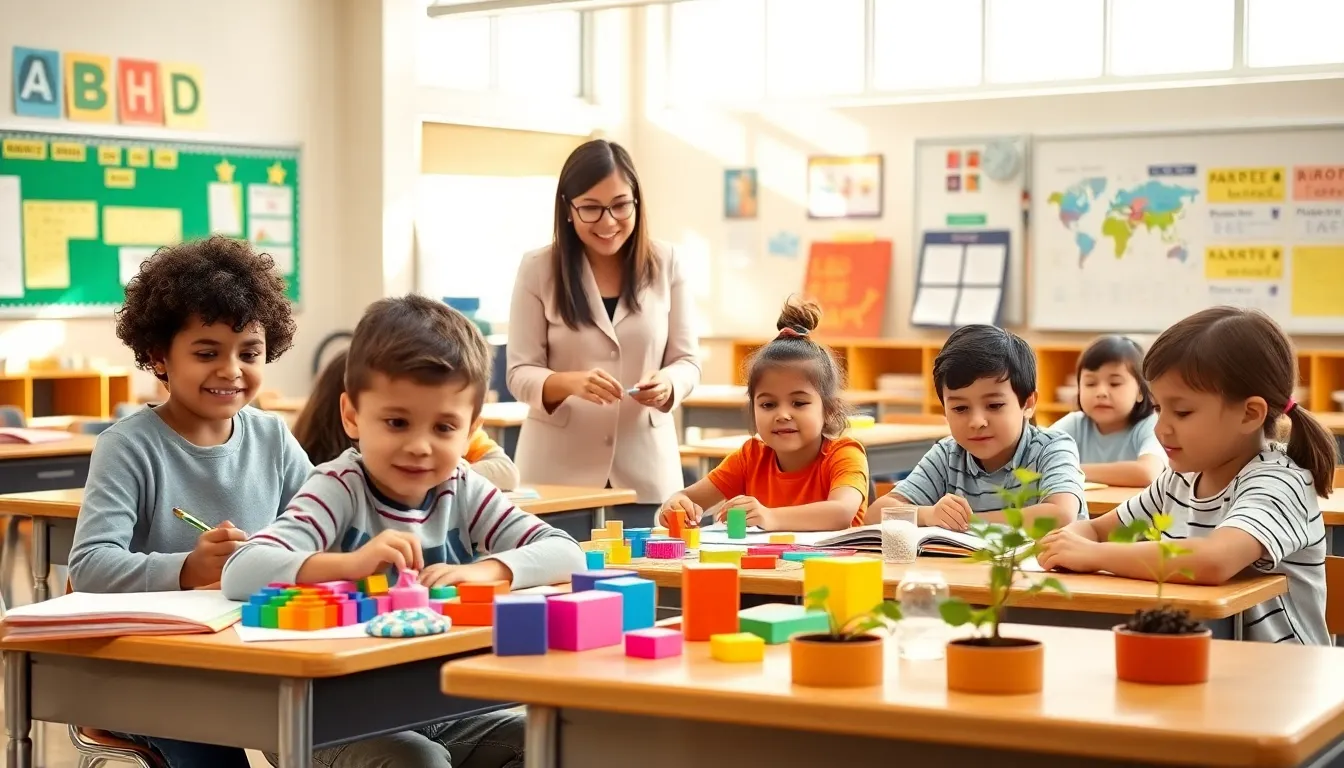
Elementary school examples shape how children learn, grow, and discover their strengths. From reading assignments to science experiments, these activities build the foundation for lifelong learning. Parents and educators often search for practical elementary school examples to support classroom instruction and home learning. This guide covers academic subjects, creative pursuits, and social-emotional development. Each section provides specific activities that teachers use and parents can reinforce at home. Whether someone needs ideas for a math project or wants to understand how schools teach emotional skills, this resource delivers clear answers.
Table of Contents
ToggleKey Takeaways
- Elementary school examples include activities across academic subjects, creative pursuits, and social-emotional learning designed for kindergarten through sixth grade.
- Reading and writing activities like partner reading, guided reading groups, and personal narratives build essential literacy skills.
- Math and science projects use hands-on tools like manipulatives, experiments, and STEM challenges to make abstract concepts concrete.
- Creative and extracurricular elementary school examples—including art, music, physical education, and clubs—develop imagination, motor skills, and teamwork.
- Social and emotional learning activities teach children to manage feelings, resolve conflicts, and collaborate through practices like morning meetings and mindfulness.
- Parents can reinforce these classroom activities at home by understanding how teachers approach phonics, math concepts, and emotional development.
What Are Elementary School Examples?
Elementary school examples are specific activities, lessons, and projects designed for children in kindergarten through fifth or sixth grade. These examples cover every subject area and skill set that young students need to develop.
Schools use these activities to teach fundamental concepts. A first-grader learning to count might use blocks or beads. A fifth-grader studying ecosystems might build a terrarium. Both represent elementary school examples at different developmental stages.
Teachers design these activities with clear learning goals. Each example connects to curriculum standards while keeping students engaged. Good elementary school examples share common traits: they match the child’s age level, they encourage active participation, and they build on previous knowledge.
Parents benefit from understanding these examples too. When families know what happens in classrooms, they can support learning at home. A parent who understands how phonics instruction works can practice letter sounds during car rides or bedtime reading.
Elementary school examples also adapt to different learning styles. Visual learners might use charts and diagrams. Kinesthetic learners might act out historical events. Audio learners might listen to educational songs. Teachers mix these approaches to reach every student.
Academic Subject Examples
Academic subjects form the core of elementary education. Reading, writing, math, and science each require specific activities that help children master essential skills.
Reading and Writing Activities
Reading instruction starts with phonics and letter recognition. Teachers use alphabet cards, magnetic letters, and picture books to build early literacy. Students practice sounding out words, recognizing sight words, and reading simple sentences.
Elementary school examples for reading include:
- Partner reading, where two students take turns reading aloud
- Reading response journals, where children write about books they’ve finished
- Guided reading groups, where teachers work with small clusters of students at similar skill levels
- Reader’s theater, where students perform scripts based on stories
Writing activities progress from simple sentences to full paragraphs and eventually short essays. Younger students might write about their weekends or favorite animals. Older students tackle persuasive essays and research reports.
Popular writing examples include personal narratives, poetry units, and letter-writing projects. Many teachers use mentor texts, published books that demonstrate good writing techniques, to show students what effective writing looks like.
Math and Science Projects
Math instruction in elementary school moves from counting and basic operations to fractions, decimals, and early algebra concepts. Teachers use manipulatives like base-ten blocks, fraction tiles, and number lines to make abstract concepts concrete.
Elementary school examples for math include:
- Word problem workshops where students solve real-world scenarios
- Math games that reinforce multiplication facts
- Measurement activities using rulers, scales, and measuring cups
- Graphing projects where students collect and display data
Science education introduces the scientific method through hands-on experiments. Students learn to ask questions, form hypotheses, conduct tests, and draw conclusions.
Common science examples include growing plants from seeds, building simple circuits, testing which materials conduct electricity, and observing weather patterns. Many schools add STEM projects that combine science, technology, engineering, and math. Students might design bridges from popsicle sticks or create egg-drop protection devices.
Creative and Extracurricular Examples
Creative activities balance academic instruction and help students discover talents beyond reading and math. These elementary school examples develop imagination, motor skills, and self-expression.
Art projects range from simple coloring pages to complex mixed-media creations. Students learn about color theory, famous artists, and different art forms. They might paint like Monet, create collages, or sculpt with clay. Art instruction also builds fine motor skills that support handwriting development.
Music education introduces rhythm, melody, and basic instruments. Many elementary schools teach recorder in third or fourth grade. Students also sing in groups, learn about musical notation, and explore different genres and cultures through music.
Physical education keeps children active and teaches teamwork. Elementary school examples include:
- Team sports like soccer, basketball, and kickball
- Individual activities like jump rope, running, and gymnastics
- Cooperative games that require group problem-solving
- Dance and movement activities
Drama and theater programs let students perform plays, practice public speaking, and build confidence. Even simple classroom skits help children develop communication skills.
Many schools offer clubs and after-school programs. Chess clubs teach strategic thinking. Coding clubs introduce basic programming. Garden clubs connect students with nature and science. These extracurricular elementary school examples extend learning beyond the regular school day.
Social and Emotional Learning Examples
Social and emotional learning (SEL) teaches children to understand their feelings, build relationships, and make responsible decisions. These skills matter as much as academic achievement for long-term success.
Elementary school examples for SEL include morning meetings where students share feelings and practice listening. Teachers might use feeling charts, emotion cards, or check-in circles to help children identify and express emotions.
Conflict resolution activities teach students to solve problems peacefully. Role-playing exercises let children practice handling disagreements. Many schools use specific curricula that teach steps for calming down, expressing concerns, and finding solutions together.
Cooperative learning projects require students to work as teams. They must communicate, divide tasks, and support each other. These group activities build collaboration skills that students will use throughout their lives.
Mindfulness practices have become popular elementary school examples for emotional regulation. Students learn breathing exercises, body scans, and quiet reflection techniques. Even five minutes of mindfulness can help children focus and manage stress.
Character education programs teach values like honesty, kindness, and responsibility. Schools might recognize students who demonstrate these traits or discuss how characters in books show positive qualities.
Anti-bullying programs represent another category of SEL examples. Students learn to recognize bullying behavior, stand up for others, and report problems to trusted adults. These programs create safer, more supportive school environments.