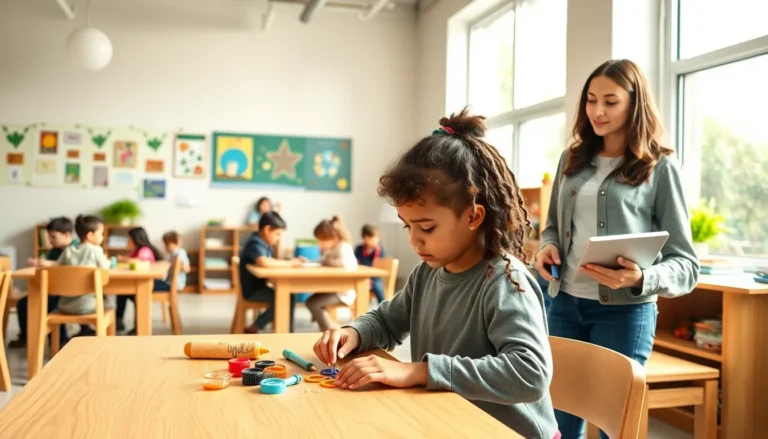

Alternative education strategies offer families a different path to learning. These methods step outside traditional classroom settings and give students more freedom, creativity, and personalized instruction. Parents today have more options than ever before. From Montessori schools to homeschooling, alternative education strategies provide flexible ways to meet each child’s unique needs. This guide explores the most popular methods, their benefits, and how families can choose the right fit.
Table of Contents
ToggleKey Takeaways
- Alternative education strategies—including Montessori, Waldorf, homeschooling, and unschooling—offer flexible, student-centered approaches that differ from traditional schooling.
- These methods allow personalized learning, letting students progress at their own pace while focusing on their individual interests and strengths.
- Alternative education strategies can reduce academic stress by emphasizing growth and understanding over grades and standardized testing.
- Montessori and Waldorf schools prioritize hands-on learning, creativity, and whole-child development through arts, practical skills, and self-directed activities.
- When choosing an alternative education approach, observe your child’s learning style, consider family values, research local options, and remain open to adjusting as needs change.
What Is Alternative Education?
Alternative education refers to any learning approach that differs from conventional public or private schooling. These programs often use non-traditional teaching methods, flexible schedules, and student-centered curricula.
Alternative education strategies can take many forms. Some operate within formal school buildings. Others happen at home or in community spaces. The common thread is a focus on individual learning styles and student interests.
Traditional schools follow a standardized curriculum with set class times and age-based grade levels. Alternative education strategies, by contrast, often allow students to progress at their own pace. Teachers act more as guides than lecturers. Students take an active role in directing their learning.
These approaches work well for students who struggle in conventional settings. They also appeal to families who want more control over their child’s education. Alternative education strategies can address learning differences, foster creativity, and build intrinsic motivation.
Popular Alternative Education Methods
Several alternative education strategies have gained widespread recognition. Each offers a distinct philosophy and set of practices.
Montessori and Waldorf Approaches
Montessori education began in Italy over a century ago. Dr. Maria Montessori developed this method based on careful observation of children. Montessori classrooms feature mixed-age groups and hands-on learning materials. Students choose their activities and work independently or in small groups. Teachers observe and guide rather than direct.
Montessori schools emphasize practical life skills, sensory exploration, and self-correction. Children learn math using physical objects like beads and blocks. They develop reading skills through phonetic materials. This approach builds independence and a love of learning.
Waldorf education, founded by Rudolf Steiner in 1919, takes a different path. Waldorf schools integrate arts, music, and movement into every subject. Young children learn through imaginative play rather than formal academics. Older students explore subjects through storytelling, drama, and hands-on projects.
Waldorf classrooms limit screen time and standardized testing. Teachers often stay with the same group of students for several years. This builds strong relationships and deep understanding of each child’s development. Both Montessori and Waldorf represent popular alternative education strategies that prioritize the whole child.
Homeschooling and Unschooling
Homeschooling allows parents to educate their children at home. Families can follow a structured curriculum or create their own. Some use online courses and textbooks. Others take a more relaxed approach with field trips, projects, and real-world experiences.
Homeschooling offers flexibility in scheduling and content. Parents can focus on their child’s interests and address weak areas. They can also incorporate family values and beliefs into daily lessons. This makes homeschooling one of the most customizable alternative education strategies available.
Unschooling takes homeschooling further. This philosophy rejects formal curricula entirely. Children learn through everyday life, play, and self-directed exploration. Parents provide resources and opportunities but don’t assign lessons or tests.
Unschooling trusts that children are naturally curious. Advocates believe kids learn best when they follow their interests. A child fascinated by dinosaurs might study paleontology, geology, and biology, all without a textbook. Critics worry about gaps in knowledge, but supporters argue that motivated learners fill those gaps on their own.
Benefits of Alternative Education Strategies
Alternative education strategies offer several advantages over conventional schooling.
First, these methods allow personalized learning. Students work at their own pace and focus on topics that interest them. A child who excels in math can move ahead. A student who needs more time with reading gets that support. This flexibility helps each child reach their potential.
Second, alternative education strategies often reduce stress. Many children feel anxious about tests, grades, and competition. Alternative settings tend to emphasize growth over performance. Students learn for understanding, not just for scores.
Third, these approaches build critical thinking and creativity. Traditional classrooms often reward memorization and compliance. Alternative education strategies encourage questioning, experimentation, and problem-solving. Students develop skills that serve them throughout life.
Fourth, alternative settings can strengthen family bonds. Homeschooling families spend significant time together. Parents gain insight into their child’s learning process. This connection supports emotional development and communication.
Finally, alternative education strategies prepare students for real-world challenges. Many programs emphasize practical skills, collaboration, and self-direction. Graduates often show strong initiative and adaptability. They know how to learn independently, a skill that matters in any career.
How to Choose the Right Approach for Your Child
Selecting among alternative education strategies requires careful thought. Every child is different, and no single method works for everyone.
Start by observing your child. How does she learn best? Does she thrive with structure or prefer freedom? Does he enjoy hands-on activities or prefer reading and discussion? Understanding your child’s learning style helps narrow the options.
Consider your family’s values and goals. Some parents prioritize academic rigor. Others want to emphasize creativity, social-emotional growth, or religious instruction. Alternative education strategies vary widely in philosophy. Find one that aligns with what matters most to your family.
Research local options. Visit schools, attend open houses, and talk to other parents. Ask about curriculum, teaching methods, and class sizes. For homeschooling, explore co-ops and support groups in your area.
Think about practical factors too. Alternative education strategies differ in cost, time commitment, and availability. Private Montessori or Waldorf schools can be expensive. Homeschooling requires a parent to be available during the day. Online programs offer flexibility but need reliable internet access.
Don’t be afraid to experiment. Many families try one approach and adjust later. A child who starts in a Montessori preschool might transition to public school or homeschooling. The right fit can change as children grow and their needs evolve.