
This alternative education guide helps families discover learning options beyond traditional schooling. Alternative education has grown significantly in recent years, with millions of students now pursuing non-traditional paths. According to the National Center for Education Statistics, approximately 3.3 million students were homeschooled in the United States as of 2023. That number doesn’t include children in Montessori programs, Waldorf schools, or other alternative settings.
Why the shift? Many parents and students find that conventional classrooms don’t meet their needs. Some learners thrive with hands-on approaches. Others need flexible schedules or personalized curricula. Alternative education offers these options and more. This guide covers the main types of alternative education, their benefits and challenges, and how families can choose the right path.
Table of Contents
ToggleKey Takeaways
- Alternative education includes homeschooling, Montessori, Waldorf, microschools, and online programs—each offering unique approaches beyond traditional schooling.
- Over 3.3 million U.S. students were homeschooled in 2023, reflecting growing demand for flexible, personalized learning options.
- This alternative education guide highlights key benefits like individualized instruction, schedule flexibility, and intrinsic student motivation.
- Challenges include tuition costs (up to $30,000 annually for private programs), socialization planning, and varying college admission requirements.
- Before choosing an alternative education path, assess your child’s learning style, your family’s capacity, and your state’s legal requirements.
- Hybrid approaches allow families to combine homeschooling with traditional classes, offering flexibility without an all-or-nothing commitment.
What Is Alternative Education?
Alternative education refers to any educational approach that differs from conventional public or private schooling. These programs often prioritize student-centered learning, flexibility, and individualized instruction.
The term covers a wide range of options. Some alternative education programs operate within school buildings. Others happen entirely at home. What unites them is a departure from the standard classroom model with its fixed schedules, standardized testing, and one-size-fits-all curriculum.
Alternative education isn’t new. Philosophers like John Dewey advocated for experiential learning over a century ago. Maria Montessori opened her first school in 1907. But interest has surged in recent decades as families seek educational environments that match their values and their children’s learning styles.
Students pursue alternative education for many reasons:
- Learning differences that aren’t well-served by traditional classrooms
- Desire for more creative or hands-on instruction
- Religious or philosophical beliefs
- Geographic isolation from quality schools
- Bullying or social difficulties in conventional settings
- Advanced learners who need faster-paced instruction
Alternative education programs exist at every level, from preschool through high school and beyond. Some even extend into higher education through gap year programs, apprenticeships, and non-traditional colleges.
Types of Alternative Education Programs
Alternative education takes many forms. Understanding the main categories helps families identify which approach might work best for their situation.
Homeschooling and Unschooling
Homeschooling remains the most common form of alternative education in the United States. Parents take primary responsibility for their children’s education, often using purchased curricula or creating their own.
Homeschool families have tremendous flexibility. They can incorporate religious instruction, travel freely, and adjust schedules around family needs. Many homeschoolers participate in co-ops where families share teaching responsibilities and resources.
Unschooling takes a more radical approach. This method, popularized by educator John Holt, rejects formal curricula entirely. Children direct their own learning based on their interests. Parents act as facilitators rather than teachers. A child interested in dinosaurs might spend months studying paleontology, geology, and biology through that lens.
Critics worry unschooling leaves gaps in essential knowledge. Supporters argue it produces passionate, self-directed learners who retain information better because they chose to learn it.
Montessori and Waldorf Schools
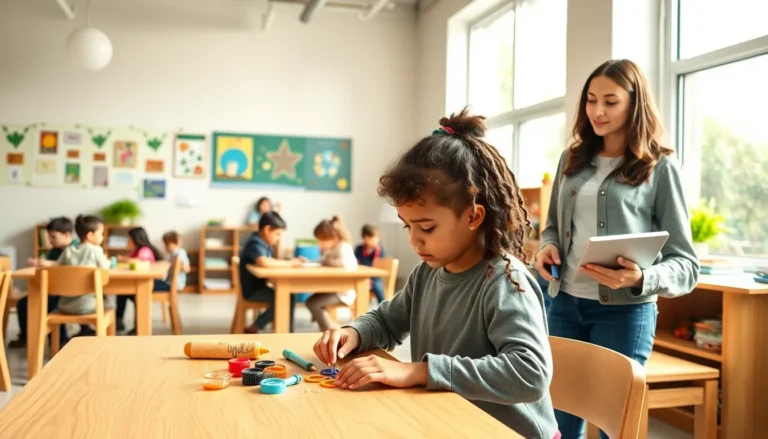
Montessori education emphasizes independence and hands-on learning. Classrooms typically include mixed-age groups and specially designed materials. Children choose their activities within structured environments. Teachers observe and guide rather than lecture.
Montessori programs serve children from infancy through high school, though elementary programs are most common. Research suggests Montessori students often excel in reading, math, and executive function skills.
Waldorf education, developed by Rudolf Steiner in 1919, takes a different approach. These schools emphasize creativity, imagination, and holistic development. Early childhood programs avoid academic instruction, focusing instead on play and artistic activities. Formal reading instruction typically begins around age seven.
Waldorf schools incorporate arts, music, and movement throughout the curriculum. Students often stay with the same teacher for multiple years, building strong relationships. Technology use is limited, especially in younger grades.
Other alternative education options include:
- Microschools: Small, independent learning communities with 10-15 students
- Forest schools: Outdoor education programs emphasizing nature connection
- Democratic schools: Students participate in all aspects of school governance
- Online schools: Fully virtual programs offering flexibility and broad course options
Benefits and Challenges of Alternative Education
Alternative education offers significant advantages, but it also presents real challenges. Families should weigh both before making decisions.
Key Benefits
Personalized learning stands out as the primary benefit. Alternative education programs can adapt to individual students’ needs, interests, and learning speeds. A child who struggles with reading but excels at math won’t be held back in both subjects or pushed forward in neither.
Flexibility matters too. Homeschooling families can travel during off-peak times, accommodate parents’ work schedules, or adjust for children’s health needs. This flexibility particularly benefits young athletes, performers, and students with chronic illnesses.
Many alternative education approaches foster intrinsic motivation. When students have input into what and how they learn, they often engage more deeply with material. Montessori students regularly choose challenging work because they find it interesting, not because they’ll be tested on it.
Safer learning environments attract some families. Children who experienced bullying or social anxiety in traditional schools often thrive in smaller, more controlled settings.
Common Challenges
Cost presents a major barrier. Private alternative schools charge tuition ranging from $10,000 to $30,000 annually. Homeschooling appears cheaper but often requires one parent to reduce work hours or leave employment entirely.
Socialization concerns persist. Homeschooled children don’t automatically lack social skills, many participate in sports, community groups, and homeschool co-ops. But parents must actively create social opportunities that happen naturally in traditional schools.
College admissions can be complicated. Most colleges now accept homeschoolers and alternative school graduates, but documentation requirements vary. Families need to maintain careful records and often rely more heavily on standardized test scores.
Quality control varies widely in alternative education. Unlike public schools, many alternative programs face minimal oversight. Parents must research thoroughly and evaluate programs carefully.
How to Choose the Right Alternative Education Path
Choosing an alternative education path requires honest assessment of your child’s needs, your family’s resources, and available options.
Start with your child. What kind of learner are they? Do they need structure or freedom? Do they thrive in groups or prefer working independently? A highly social child might struggle with homeschooling unless the family actively pursues group activities. A child who needs quiet focus might flourish.
Consider your family’s capacity. Homeschooling demands significant time from parents. Can someone in your household commit to this? Do you have the patience and skills to teach? Be honest. Many families start homeschooling enthusiastically and burn out within a year.
Research local options thoroughly. Visit schools. Talk to current families. Ask about curriculum, teacher qualifications, and student outcomes. For alternative education programs, word-of-mouth recommendations often prove more reliable than marketing materials.
Understand legal requirements. Homeschool regulations vary dramatically by state. Some require notification only. Others mandate curriculum approval, standardized testing, or teacher certification. Know your state’s rules before starting.
Think long-term. How will this education path affect high school transcripts and college applications? Some alternative education programs provide excellent preparation for higher education. Others may require additional planning.
Consider a trial period. Many alternative education paths allow flexibility. You might homeschool for a semester to see how it works. Some Montessori and Waldorf schools offer observation days or trial enrollments.
Don’t assume alternative education must be all-or-nothing. Some families use hybrid approaches, homeschooling for certain subjects while enrolling children in classes for others. Public school students sometimes transfer to alternative programs for high school. Flexibility remains one of alternative education’s greatest strengths.