
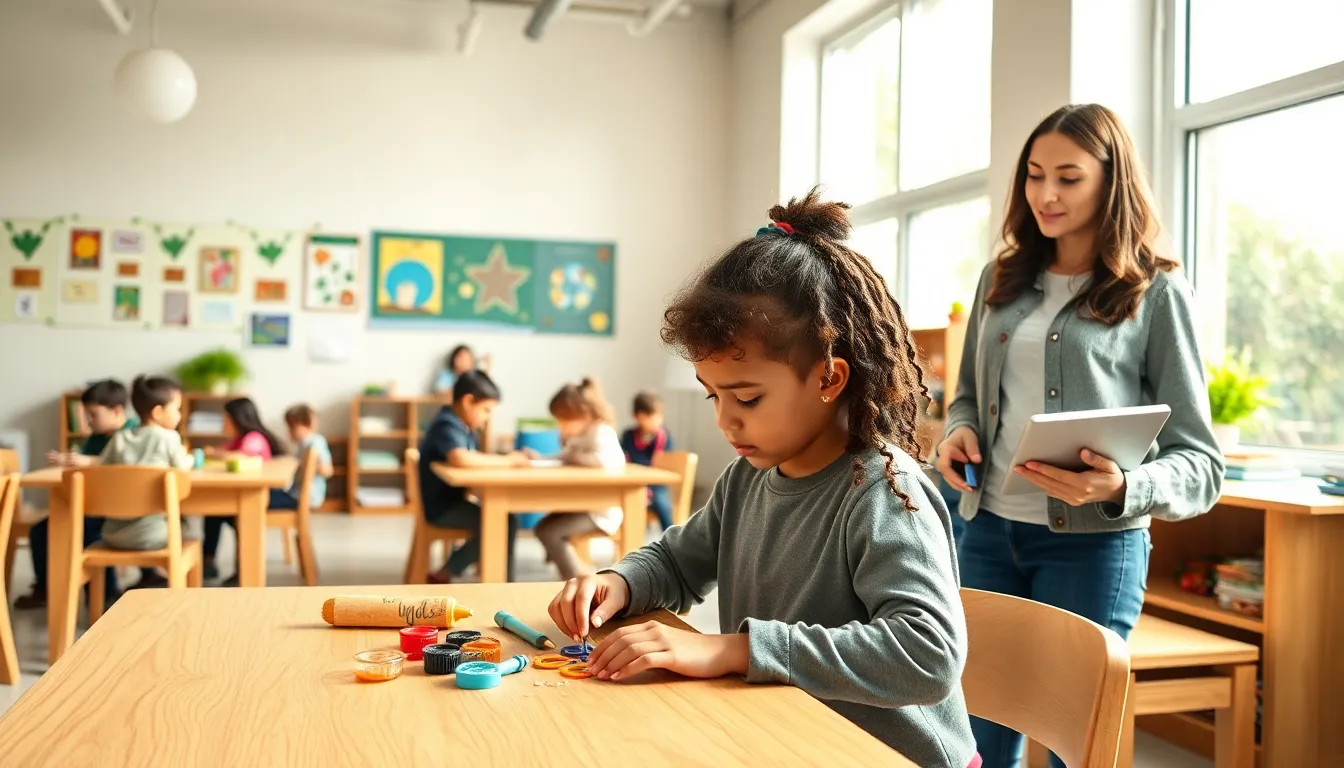
Alternative education examples are reshaping how students learn across the United States. Traditional classrooms don’t work for every child. Some students thrive with hands-on activities, while others need flexible schedules or self-directed study. Non-traditional learning paths offer solutions that match different learning styles, family values, and individual needs.
This guide covers the most popular alternative education options available today. Parents, educators, and students will find clear explanations of each approach, along with practical advice for choosing the right fit.
Table of Contents
ToggleKey Takeaways
- Alternative education examples include Montessori, Waldorf, homeschooling, charter schools, and online academies—each designed to match different learning styles and family needs.
- Montessori schools emphasize self-directed, hands-on learning with mixed-age classrooms, supporting over 5,000 programs across the U.S.
- Waldorf education focuses on whole-child development through arts, nature, and delayed academics, with minimal technology in early grades.
- Homeschooling gives families complete control over curriculum and schedule, with over 3 million U.S. students now learning at home.
- Online and virtual schools offer flexible learning from anywhere, though quality varies—always verify accreditation before enrolling.
- Choosing the right alternative education option requires assessing your child’s learning style, social needs, budget, and practical family logistics.
What Is Alternative Education?
Alternative education refers to any learning approach outside the conventional public or private school system. These programs use different teaching methods, curricula, or structures than standard K-12 schools.
Alternative education examples include Montessori schools, Waldorf programs, homeschooling, charter schools, and online academies. Each option addresses specific educational philosophies or student needs.
Why do families choose alternative education? Common reasons include:
- Learning differences: Students with ADHD, dyslexia, or autism may benefit from specialized approaches
- Schedule flexibility: Traveling families, young athletes, or performers need adaptable programs
- Educational philosophy: Some parents prefer specific teaching methods or values-based instruction
- Academic challenges: Gifted students or those struggling in traditional settings often find better outcomes elsewhere
Alternative education isn’t about rejecting mainstream schools. It’s about finding the best match for each student’s situation.
Montessori Schools
Montessori education stands out among alternative education examples for its child-centered approach. Dr. Maria Montessori developed this method in Italy over 100 years ago. Today, more than 5,000 Montessori schools operate in the United States.
The Montessori method emphasizes:
- Self-directed learning: Children choose activities from a prepared environment
- Mixed-age classrooms: Students typically span three-year age ranges
- Hands-on materials: Specially designed tools help children learn abstract concepts through touch
- Extended work periods: Uninterrupted blocks allow deep focus
Montessori classrooms look different from traditional settings. You won’t find rows of desks or a teacher lecturing at a board. Instead, children move freely between activity stations while teachers observe and guide individual progress.
Research supports Montessori outcomes. A 2017 study in Frontiers in Psychology found Montessori students showed stronger academic and social skills compared to peers in conventional schools.
Montessori works well for self-motivated learners who benefit from hands-on exploration. But, the transition to traditional high schools can feel jarring for some students.
Waldorf Education
Waldorf education offers another distinct option among alternative education examples. Rudolf Steiner founded the first Waldorf school in Germany in 1919. Approximately 1,100 Waldorf schools now exist worldwide, with around 130 in the U.S.
Waldorf programs focus on developing the whole child, head, heart, and hands. The curriculum integrates academics with arts, music, movement, and practical skills.
Key features of Waldorf education include:
- Delayed academics: Formal reading instruction typically starts around age seven
- Minimal technology: Schools limit screens, especially in early grades
- Same teacher for years: One class teacher often stays with students through eighth grade
- Artistic integration: Students paint, knit, play instruments, and perform in plays as core activities
Waldorf schools create warm, imaginative environments. Natural materials fill classrooms, wooden toys, silk fabrics, and beeswax crayons replace plastic and electronics.
Critics question the delayed reading approach and limited technology exposure. Supporters argue that Waldorf graduates develop creativity, critical thinking, and social confidence that serve them throughout life.
This alternative education example suits families who value creativity, nature connection, and a slower pace of childhood.
Homeschooling and Unschooling
Homeschooling remains one of the fastest-growing alternative education examples in America. The National Center for Education Statistics estimates over 3 million students learned at home during recent years.
Homeschooling gives families complete control over curriculum, schedule, and teaching methods. Parents can customize instruction to match their child’s pace, interests, and learning style.
Homeschooling approaches vary widely:
- Structured curriculum: Families follow purchased programs or online courses
- Eclectic approach: Parents mix resources from multiple sources
- Classical education: Students follow a rigorous liberal arts framework
- Charlotte Mason method: This approach emphasizes living books and nature study
Unschooling takes an even more radical approach. Unschoolers reject formal curricula entirely. Children learn through daily life, pursuing their own interests and questions. Reading, math, and science emerge naturally from real-world experiences.
Homeschooling requires significant parent involvement. Success depends on organization, commitment, and access to resources. Many homeschool families join co-ops where parents teach group classes in their areas of expertise.
Socialization concerns persist, though homeschooled students often participate in sports leagues, community groups, and co-op activities that provide peer interaction.
Online and Virtual Schools
Online schools represent a modern addition to alternative education examples. These programs deliver instruction through digital platforms, allowing students to learn from anywhere with internet access.
Two main types exist:
Full-time virtual schools: Students complete all coursework online. Many states offer tuition-free virtual public schools. Private online academies charge fees but may offer specialized programs.
Hybrid programs: Students attend physical classrooms part-time and complete remaining work online. This blend offers flexibility while maintaining in-person connections.
Online learning suits specific situations:
- Students with health conditions that limit school attendance
- Families who travel frequently
- Young professionals in entertainment or athletics
- Students who need advanced courses unavailable locally
- Learners who struggle with social anxiety in traditional settings
Quality varies significantly among online schools. Accreditation matters, families should verify that virtual schools hold proper credentials for college acceptance and credit transfer.
Online education demands self-discipline. Students must manage time effectively without constant teacher supervision. Parents of younger children often need to provide substantial support and structure.
The pandemic accelerated acceptance of online learning. Many families discovered that digital education could work well when implemented properly.
How to Choose the Right Alternative Education Option
Selecting from alternative education examples requires careful consideration of multiple factors. No single approach works best for every child or family.
Start by assessing the student:
- Learning style: Does the child learn best through reading, hands-on activities, or listening?
- Social needs: Does the student thrive in groups or prefer individual work?
- Interests: What subjects or activities spark genuine enthusiasm?
- Challenges: Are there learning differences or behavioral concerns that need accommodation?
Consider practical factors:
- Budget: Private alternative schools can cost $10,000 to $30,000 annually. Homeschooling and public virtual schools cost much less.
- Location: School options depend heavily on geography. Rural families have fewer choices than urban ones.
- Parent availability: Homeschooling and some alternative programs require significant parent time.
Research specific programs thoroughly:
- Visit schools and observe classrooms in action
- Talk with current families about their experiences
- Review accreditation status and academic outcomes
- Understand the transition path to high school or college
Trust your instincts about fit. A school that looks perfect on paper may feel wrong when you walk through the doors. The best alternative education choice aligns with your child’s needs and your family’s values.