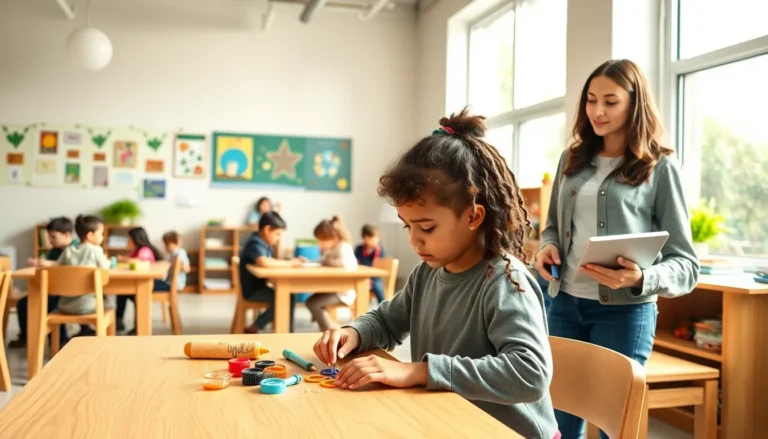

Elementary school vs. primary school, are they the same thing? Many parents, educators, and students encounter these terms and wonder if they refer to different educational stages. The short answer: they describe the same basic concept but reflect regional language preferences.
This guide breaks down the key differences between elementary school and primary school. It covers grade levels, age ranges, regional terminology, and curriculum approaches. By the end, readers will understand exactly how these terms relate to early childhood education across different countries.
Table of Contents
ToggleKey Takeaways
- Elementary school vs. primary school refers to the same educational stage—the difference is purely regional terminology.
- Elementary school is the standard term in the United States, while primary school is used in the UK, Australia, and most Commonwealth nations.
- Both cover similar age ranges (approximately ages 5–12) and focus on foundational skills in reading, writing, math, science, and social studies.
- The U.S. uses numbered grades (K–5 or K–6), while the UK and Australia use “Year” designations (Reception through Year 6).
- Curriculum goals align closely, but assessment methods differ—U.S. elementary schools rely more on standardized testing, while UK primary schools emphasize teacher assessments.
- Neither term is more correct; choosing between elementary school vs. primary school depends on your country’s educational tradition.
What Is Elementary School?
Elementary school refers to the first stage of formal education in the United States. Children typically attend elementary school from kindergarten through fifth or sixth grade. This means students range from approximately 5 to 11 or 12 years old.
The term “elementary” comes from the Latin word “elementarius,” meaning basic or foundational. Elementary school provides foundational skills in reading, writing, mathematics, science, and social studies. Students learn core academic concepts that prepare them for middle school and beyond.
In the U.S., elementary schools operate as standalone institutions or as part of larger K-8 or K-12 campuses. Most elementary schools organize classrooms by grade level, with one teacher handling most subjects for each class. This structure helps young children build relationships with a consistent adult figure throughout the school day.
Elementary school also introduces children to structured learning environments. Students learn classroom behavior, time management, and social skills alongside academic content. These years establish habits and attitudes toward education that often persist into adulthood.
What Is Primary School?
Primary school describes the initial phase of formal education in many countries outside the United States. The United Kingdom, Australia, Ireland, and numerous other nations use this term for early education.
Primary school typically covers ages 4 or 5 through 11 or 12. In the UK, primary education spans Reception year through Year 6. Australian primary schools generally include Prep or Foundation through Year 6.
The word “primary” indicates this education comes first, it’s the primary or initial level of schooling. Like elementary school, primary school focuses on fundamental literacy, numeracy, and general knowledge. Students develop reading comprehension, basic math operations, and introductory science concepts.
Primary schools often emphasize play-based learning in early years before transitioning to more structured academics. Many countries divide primary education into “infant” and “junior” stages. Infant years focus on socialization and basic skills, while junior years introduce more formal subject instruction.
The goals of primary school mirror those of elementary school: building academic foundations and preparing students for secondary education.
Grade Levels and Age Ranges Compared
Elementary school and primary school cover similar age groups but use different grade naming systems.
United States (Elementary School):
- Kindergarten: Ages 5-6
- Grade 1: Ages 6-7
- Grade 2: Ages 7-8
- Grade 3: Ages 8-9
- Grade 4: Ages 9-10
- Grade 5: Ages 10-11
- Grade 6: Ages 11-12 (in some districts)
United Kingdom (Primary School):
- Reception: Ages 4-5
- Year 1: Ages 5-6
- Year 2: Ages 6-7
- Year 3: Ages 7-8
- Year 4: Ages 8-9
- Year 5: Ages 9-10
- Year 6: Ages 10-11
Australia (Primary School):
- Prep/Foundation: Ages 5-6
- Year 1 through Year 6: Ages 6-12
The main difference lies in terminology rather than substance. U.S. elementary schools number grades starting from 1, while UK and Australian systems use “Year” designations. Some U.S. elementary schools end at fifth grade, while others extend through sixth grade, this varies by school district.
Both elementary school and primary school serve the same developmental purpose. They educate children during the critical years when foundational academic and social skills form.
Regional Usage and Terminology
Geography determines whether people say “elementary school” or “primary school.” These preferences reflect historical and cultural differences in educational systems.
Countries Using “Elementary School”:
- United States
- Canada (varies by province)
- Japan (translated term)
- Philippines
Countries Using “Primary School”:
- United Kingdom
- Australia
- New Zealand
- Ireland
- India
- South Africa
- Most Commonwealth nations
Canada presents an interesting case. Some provinces use “elementary,” while others prefer “primary.” Quebec often uses “primary” due to French language influence, where “école primaire” is standard.
The distinction matters for international families, educators, and anyone researching education systems. A family moving from London to Los Angeles should understand that their child’s “primary school” experience translates directly to “elementary school” in American terms.
Search engines recognize this variation. People searching for information about early childhood education might type either term depending on their location. Educational content creators often include both “elementary school” and “primary school” to reach broader audiences.
Neither term is more correct than the other. They represent linguistic choices shaped by national educational traditions.
Curriculum and Educational Approaches
Elementary schools and primary schools teach similar subjects but may differ in curriculum structure and teaching philosophy.
Core Subjects
Both systems emphasize:
- Language arts (reading, writing, grammar)
- Mathematics
- Science
- Social studies or history
- Physical education
- Arts and music
Teaching Methods
U.S. elementary schools often follow state-specific standards. The Common Core State Standards, adopted by most states, outline specific learning objectives for each grade level. Teachers assess students through standardized tests and classroom evaluations.
UK primary schools follow the National Curriculum. This framework sets attainment targets for Key Stage 1 (ages 5-7) and Key Stage 2 (ages 7-11). Students take Standard Assessment Tests (SATs) at the end of Year 2 and Year 6.
Australian primary schools operate under the Australian Curriculum, which provides national consistency while allowing state-level flexibility.
Classroom Structure
Elementary school classrooms in the U.S. typically feature one teacher per class. This teacher instructs all major subjects. Some schools bring in specialists for art, music, or physical education.
Primary schools in other countries follow similar models. But, some UK primary schools use more subject-specific teaching in upper years, preparing students for secondary school structures.
Assessment Differences
The elementary school vs. primary school comparison reveals different assessment cultures. U.S. schools emphasize standardized testing more heavily than some international systems. UK primary schools test students but place greater emphasis on teacher assessments and portfolio-based evaluation.